Showing posts with label watermelon. Show all posts

August 25, 2023

Garden Notes: August 2023

 Rainfall 

  • 2nd: 0.02" 
  • 3rd: 2.72"
  • 7th: 0.35"
  • 9th: 0.2"
  • 10th: 1.07"
  • 11th: 0.04"
  • 12th: 0.44"
  • 24th: 0.28"
  • 27th: 0.23"
  • 28th: 0.43"
  • 29th: 0.45:
  • 30th: 0.14"
  • Total: 6.37 inches

Temperature
  • range of nighttime lows: 62 to 75°F (17 to 24°C)
  • range of daytime highs: 76 to 95°F (25 to 35°C)

Weather Notes

The weather service keeps trying to forecast us into scorching temperatures, but Mother Nature simply isn't cooperating. Of course, we live amongst trees and vegetation, so our temps will be considerably lower than in towns and cities, where concrete, asphalt, and blacktop absorb and retain heat. Even so, we still have humidity to deal with, so it feels hot as usual! What is unusual, is our continued overnight lows in the 60s. I don't ever recall nights like these; our summer lows are usually in the mid-70s. Getting down into the 60s really helps cool the house down and keep it more comfortable during the day.

Planted
  • kale
  • turnips
  • carrots
  • parsnips
  • collard greens
  • lettuce

Picking and Preserving

August is my busiest month. I spend the morning picking and the afternoon preserving.

Harvest bucket in early August

Harvest bucket in late August

It's the month for figs and pears, so these keep me busy.


We seem to have had an extra long run for the figs, which usually only last a week or two. They kept producing for more than three weeks this year. 

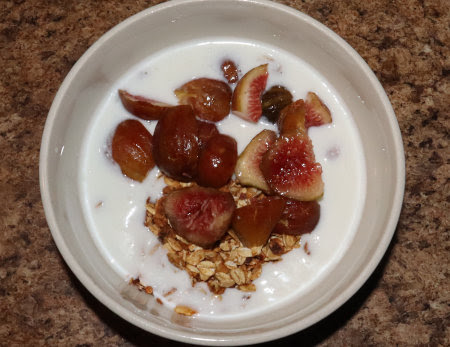
Fresh figs with kefir and granola

When the harvest is in full flush, I can pints of figs. When it trickles down to smaller numbers, I quarter and dehydrate them. Sadly, another of our fig trees is dying. That's the third one in as many years.

Amazingly, we have very little bird damage to our figs this year. I suspect it's because they're feasting on elderberries instead.


While I'm not getting a lot of elderberries, I did get enough to make another half-gallon of elderberry infused vinegar. 


We eat pears fresh and the rest go to make pear sauce. 


Dan's not keen on canned pear pieces, but we both like pear sauce, which I think is easier to do than chunks anyway. Most of the sauce is canned, but I'm going to dehydrate some too.

Fresh pear pie

I guess because of the rain and cooler temperatures, my cucumbers continue to look good.


These are my landrace cucumbers, second year. As it gets hotter they slow down a bit, but I've replenished our dill pickle supply and we continue to eat them in salads almost daily. 

Peppers are doing well.


As is the okra.


I had volunteer cherry tomatoes come up in the okra bed. They sort of lean on the okra plants, making them easier to pick. Both seem to be getting enough sun and are producing well.

Okra and tomato plants growing together.

I try not to plant too much okra, because one year I had so much I still had okra in the freezer when the new harvest came in. Frozen okra oven-fries nicely and makes a tasty vegetable, but we'd eaten so much of it over winter that the first fresh harvest wasn't as appealing as it usually is. I love the anticipation of those first seasonal tastes. 

Even so, I'm freezing some of the extra.

Ready for the freezer. I'll add more as I have extra.

The nice thing about okra, is that it can be frozen without blanching. I may try to can some with cherry tomatoes as an experiment too.

Speaking of cherry tomatoes, we have those in abundance. I only have half-a-dozen slicing tomato plants, but the cherry toms absolutely thrive. I've already shown you some of the pizza sauce I made, and I've been popping extras in the freezer for next year's batch. Also, I've started a couple of jars cherry tomatoes preserved in olive oil. I found the recipe in Preserving Food Without Freezing or Canning and I tried a couple of pints last year, and we really liked it. 


This year I'm going to preserve a couple of quarts. The recipe calls for cherry tomatoes, small onions, and fresh herbs (I used rosemary, thyme, and oregano). Everything is sprinkled with salt and a couple tablespoons of vinegar or lemon juice, then covered with extra virgin olive oil. I vacuum seal the jar as well. 

These make a wonderful condiment or salad topper, complete with tomato and herb flavored oil and vinegar salad dressing right out of the jar!

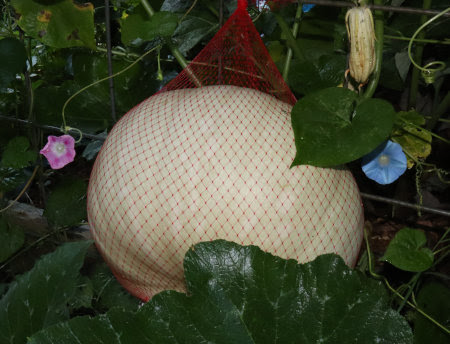
My watermelons have been incredibly slow to do anything.

Baby watermelon

I hope we get some before first frost!

And here's a treat.

Asparagus!

I always thought asparagus was a spring thing, but I've been regularly cutting small handfuls this month. They make a great snack, addition to salad, or scrambled eggs. 

Speaking of salads, I usually show you one.


This is my version of taco salad, with chips instead of a taco bowl. Avocado makes it special, as does the sauce, which is ricotta cheese mixed with salsa. We've been eating these once a week.

Varmint

Earlier this month I had a problem with something eating the leaves off my sweet potato plants. Dan put out his live animal trap and trail camera one night, and caught this!

Raccoon in live animal trap.

That's pretty much it for my August garden. How about yours?

October 28, 2022

Garden Notes: October 2022

I love October. In September, we hope for relief from the blazing summer heat, but in October, there is a noticeable drop in temperature. It's the month when we start watching for an early frost, and it's the month when the leaves begin to change color. (For my October fall color photos, click here.) It's the month when all our homestead critters are frisky and full of antics. Kitchen and garden projects have slowed down so there's time to enjoy the changes. Most of my cooking is done in the house now, rather than my back porch summer kitchen. October is when we light our first woodstove fire of the season and the first of the canned summer goodness is opened and consumed. The only downside to October, is that it's typically a dry month for us.

Rainfall 

  • 12th: 0.05"
  • 26th: 0.125"
  • 31st: 1.375"
  • Total: 1.55 inches

Temperature
  • nighttime range: 31-63°F (-0.5-17°C)
  • daytime range: 58-80°F (14-27°C)

First Frost

We had scattered frost on the morning of the 18th, and a blanketing frost on the 19th. So the summer garden is officially done. 

Marigolds sporting our first frost.

Planting & Growing

The fall garden is planted, but it's been dry, so it's not growing well. I've been watering some of my seedlings, but chickens got into the garden and scratched up quite a few beds. Anything that survived all that may have a chance! How long it lasts will depend on how cold or mild it is this winter.

Harvesting

Early October yields (before the frost) were meal size pickings.

Sauteed okra, onions, and cherry tomatoes

Orange Glo watermelon

No waste with watermelon. Chickens and goats love the rind.

Kale, collards, and daikon leaves

Greens steamed in butter with some grated carrot

Oregano, rosemary, and thyme (in my olive oil kept feta cheese).

Asian persimmons on the tree

The variety is Ichi-Ki-Kei-Jiro. I chose it because it said to be heat and drought tolerant (which it has been!) It's a fuyu type, which are ready to eat when they turn orange (unlike the kind that are astringent until after frost). This is the first real harvest we've gotten from it. It's about time too, since I planted it in 2015!

Scooping out the gel and removing the seeds.

Persimmon ready for ???
Persimmon pancakes

Freezing the extra in muffin pans.

When frost became imminent, we harvested everything that might suffer damage.

Last of the peppers. These are Giant Marconi.

Last of the green slicing tomatoes

Hugelkultur sweet potato squash

The last of the cushaws.

The mature squash have a home in the pantry. They are like pumpkins in terms of preparation and flavor. The green ones taste like summer squash, and can be prepared the same way.

A tender green cushaw seasoned and sauteed in butter.

But green winter squash don't keep well. The littlest ones still have tender seeds, so they were sliced, blanched, and frozen. The larger green squash, like this one,

Immature (green) cushaw

have large, but immature seeds that are tough.The skin is still tender, so the seeds were scooped out and the rest of the squash was cubed and canned.

Canned "green" winter squash. Eat like summer squash.

I planted three types of sweet potatoes. These are the Georgia Jets.

Taste testing the sweet potatoes required a sweet potato pie.

Overwintering

I'm trying something new this year. I found a YouTube video on how to overwinter pepper plants (https://youtu.be/x09X87UCZTI). I'm giving it a try.

Pepper plant pruned, potted, and ready to come in.

I only had two pepper plants this year, both purchased as 4-inch potted plants. This particular plant looked quite poorly most of the summer, and I kept thinking it was going to die. But the healthier looking plant died instead, and this one really perked up after a good rain and cooler temperatures. It was producing well until first frost threatened. So, it became my overwintering experiment. It would be great to get an early start on our peppers!

Challenges

The problems this time of year aren't so much bugs or disease, but lack of rain and critters. That includes birds (including naughty chickens), chipmunks, skunks, or groundhogs. In fact, we found a young groundhog had set up it's winter home in one of the garden beds! Dan found the hole, and I came face to face with the groundhog chowing down on a chicory plant. We didn't want it demolishing the garden and we hate to waste anything, so the groundhog became . . . 

Garden Groundhog Soup

Now you know why I was looking for a recipe for groundhog. My small harvest amounts were perfect for making this soup. I added peeled tomatoes, onion, green beans, yam berries, cowpeas, kale, tatume summer squash, and previously canned bone broth. Our favorite winter lunch is soup, so here are four lunches, ready to heat and eat.

Okay, I think that's it. At the beginning of the month, I didn't expect this to be a very long post. But first frost changed that! 

How about you? Is your garden just ending, or just starting?

August 29, 2022

Garden Notes: August 2022

 Rainfall

  • 1st: 0.35"
  • 3rd: 0.125"
  • 4th: 1"
  • 7th: 0.8"
  • 11th: 0.9"
  • 17th: 0.1"
  • 19th: 0.5"
  • 21st: 0.7"
  • 26th: 0.1"
  • Total: 4.575"

Temperature

  • nighttime range: 68-75°F (20-24°C)
  • daytime range: 78-94°F (25.5-34.5°C)

No complaints about August weather. We had good rainfall and generally cooler daily temperatures than July. We only saw 90s during the first and last weeks of the month. On the other hand, the higher humidity meant that it felt just as bad as the 90s! What really helps is when it gets down to below 70°F (21°C) at night because we can cool the house down, making it more tolerable during the day.

State of the garden

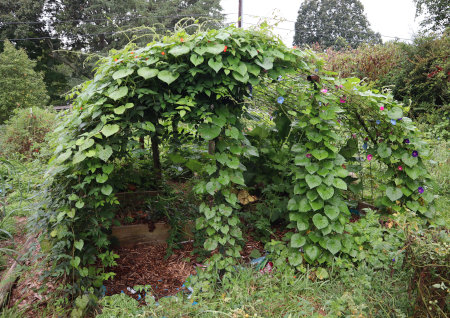
All I can say is, beauty is in the eye of the beholder. Everything is overgrown and runaway so that it looks a mess. But almost everything in it is useful!

Here we have cherry tomatoes, watermelon, mangels, horseradish,
celery, lambs quarter, sweet potatoes, raspberries, cowpeas, landrace 
brassicas, morning glory, a couple of carrots, and a potato plant or two.
Hoophouse: The living shade you see is hopniss, cherry tomatoes, and morning glories.

Also a volunteer winter squash, cultivated grape, and Chinese yams.

My largest sweet potato squash so far.

Inside the hoophouse are winter squash, Malabar spinach, violets,
strawberries (back right bed) and cultivated burdock (back left bed.)

Hugelkultur: winter squash, turtle beans, cherry tomatoes,
chicory, clover, morning glories, lambs quarter, & sunchokes.

Hugelkultur closeup featuring squash and chicory.

African keyhole garden: sweet potatoes and a survivor kale.
The porch trellis is growing green beans and cherry tomatoes.

I planted kale in the keyhole bed about a year ago. This is one of
two plants that survived both our cold winter and hot summer.

Picking and Preserving

Bucket full of cherry tomatoes, a few okra, and one lone pepper.

The cherry tomatoes are still going gangbusters. I got bored with making and canning pizza sauce, so I'm switching to tomato juice and ketchup.

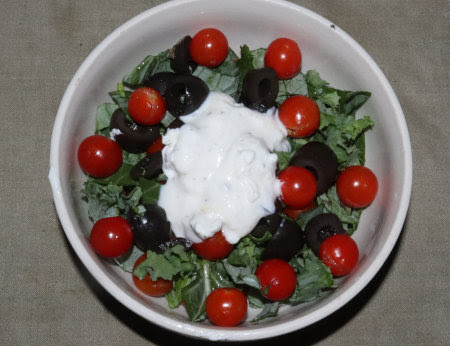
The cucumbers are done, so our salads, now, are cherry tomatoes and kale.

Tomato, kale, and black olive salad
with homemade ricotta ranch dressing.

The okra hasn't been very productive. 

Okra is a member of the hibiscus family.

I don't plant a lot, just enough to have oven-fried okra a couple times a week during growing season, with a little extra to freeze for a side dish during winter. It hasn't produced that much, although it's making a better effort now that our daily highs aren't so scorching and we're getting a little more rain.

August is fig month, and these are the largest figs we've ever seen on our trees.


They aren't all this size, but it's amazing to find them. Can't take any credit, though, because the fig trees are pretty much on their own! They are next to the goat barn, so perhaps they're getting some rich rain runoff.

Breakfast: fresh figs on peanut butter granola with
kefir. Sometimes we swap the figs for diced pears.

There were lots to can.

And dessert!

Fresh fig cake with vanilla goat milk ice cream.

Pear harvest started in late July. The heaviest harvest was a couple weeks ago.

Bucket of pears.

One year, I spent days in the kitchen canning chunked pears, but Dan wasn't very enthusiastic about them. So now, I just make pear sauce. It's easier and faster to do, and we both like it.

Cinnamon pear sauce.

As pear picking slows and the pearsauce jars fill, I switch to drying them. Ditto for figs.
 
The cores and peels are being made into vinegar.

Elderberry harvest starts in late August.

First of the elderberries.

I used the first of them to flavor my canned figs and pearsauce. I also freeze them for jelly making this winter, and will make a couple batches of elderberry wine. This year I want to try an elderberry pear wine. I've experimented with adding other fruits for subtle flavor (of which some are more likable than others).

And a few parting shots.

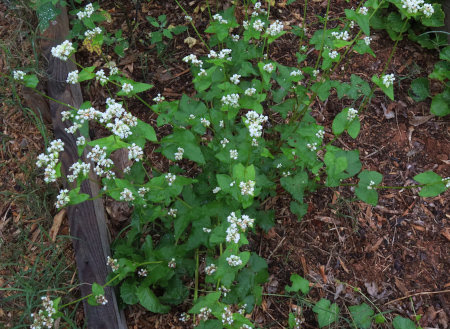
Buckwheat planted as a cover crop in my newest swale bed.
Only a few plants came up, so this will be my seed crop.

Marigolds and a winter squash blossom.

Our first Orange Glo watermelon of the summer.

I picked the watermelon just the other day. They were planted late, and only after my cantaloupe plants all died. I'm not sure what happened to them. They were doing well until our hot dry spell. I watered them faithfully, but they weren't happy and that was that. The watermelons have done much better and we're just starting to enjoy them.

So there are the pictures to go along with my Summer Mantra blog post. I liked hearing about what you all have been up to in your gardens, so keep the comments coming. 😀