Here's another update from my winter outdoor project list. Besides swales, I'm working on my forest garden. (Planning pictures and lists are here). I started planting in September, but except for the pawpaws, I haven't made a blog record yet. This post is to rectify that!
I started by transplanting seedlings that I found elsewhere on the property.

|
|
Pecan seedling. I've also been planting these in our woods, like the pawpaws and persimmons. |
|
|
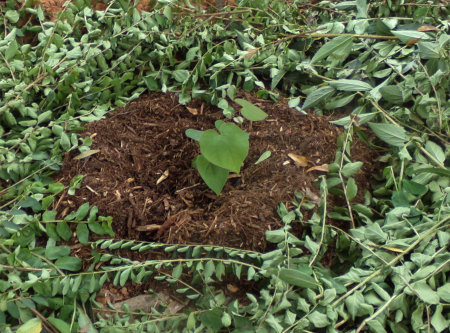
The first of two transplanted redbuds. Besides edible flowers, redbuds
are nitrogen fixers. It's mulched with chop and drop from nearby crepe myrtles. |
|
|
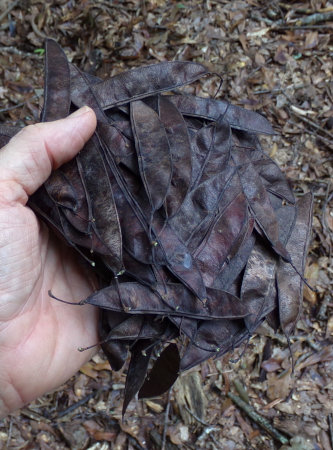
Also, I scattered redbud seed pods everywhere. This spring, I have 10 more seedlings coming from our state forestry service. |
|
|
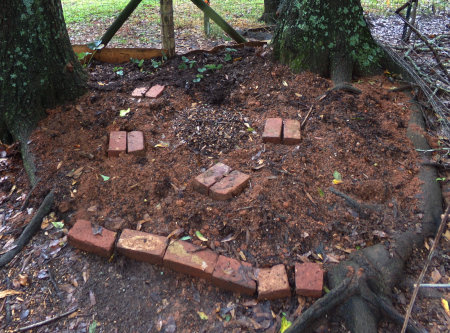
Oak guild strawberry bed, with 1st transplants in the ground. In addition to strawberries, I also planted garlic in the bed. |
As an experiment, I tried an idea from Bill Mollison. Instead of a swale, I dug a pit in the center of the bed for capturing water.

|
| That is, I dug as much as the oak roots would let me. |

|
|
Once dug, the pit is filled with wood chips. The pairs of bricks are my stepping stones. |
I don't know how well the pit will work, but it's not a spot for a swale.
|
|
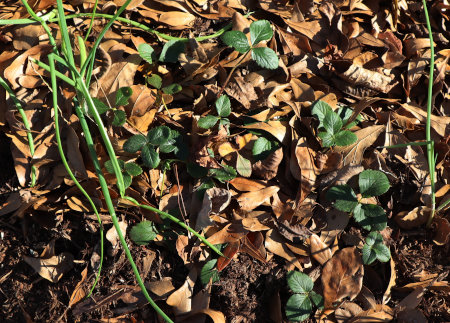
A couple months later, the strawberry plants and garlic were doing well and tucked in with a layer of oak leaves. |
|
|
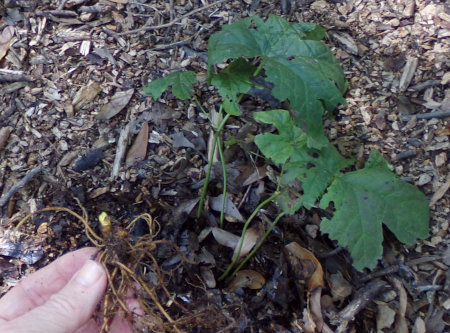
The last of my transplants was my potted golden seal. I also ordered more roots to expand my golden seal bed. |
|
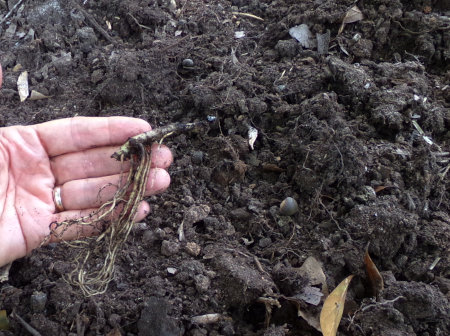
| Wild ginger. |
|
|
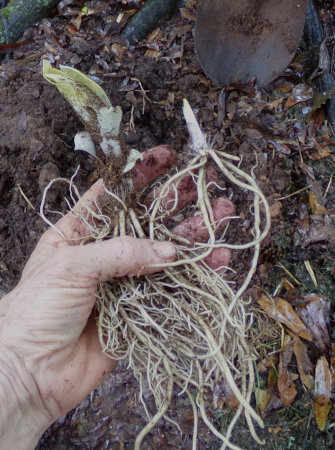
Hostas. These started off well and then got munched down, probably by skunks. Will they survive? Unknown. |
|
|
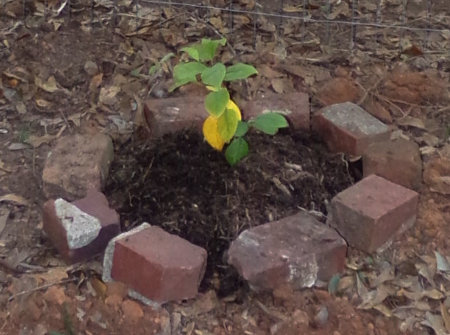
One of two spice bushes, before it dropped its leaves. I marked all my plantings with stones or bricks, so I'll know where to find them! |
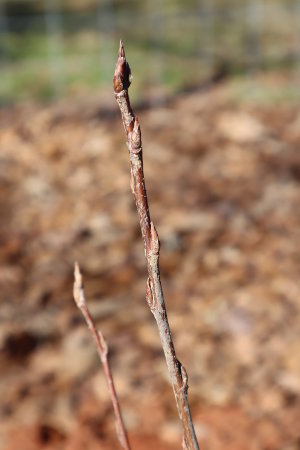
Here's another mulberry (which I now know I can propagate with cuttings). It's dormant now, but beginning to bud.
|
| Mulberry |
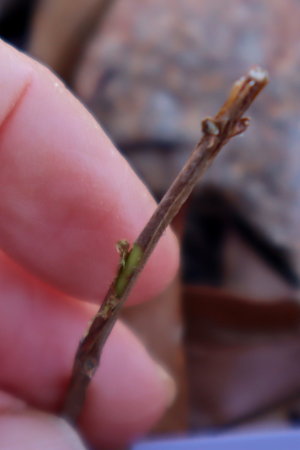
Next, I planted honeyberries (haskap). These were pretty much just sticks with roots when I planted them. Even now, I'm wondering if they're alive.
|
|
Scraping away the outer bark with my thumbnail reveals it's green and still alive! |
Haskap are primarily found in colder regions, but these varieties are said to do well in my USDA growing zone, so we'll see. They may require a little pampering the first several years, but if I can get them established, it will be worth it.
And here's my map, so I can remember where everything is planted.
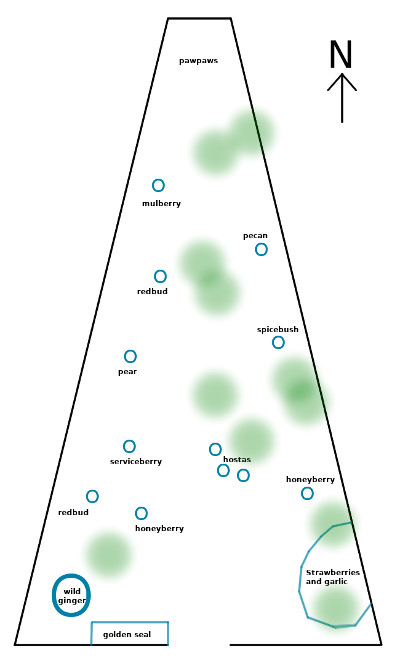 |
| The fuzzy green circles are the mature oaks. |
That's my progress so far. I think I'll add a path next. This spring, I'll have more to plant, including adding some annuals into the mix. Looking forward to that!