Showing posts with label herbal remedies. Show all posts

January 5, 2022

Bracken Poisoning in Goats

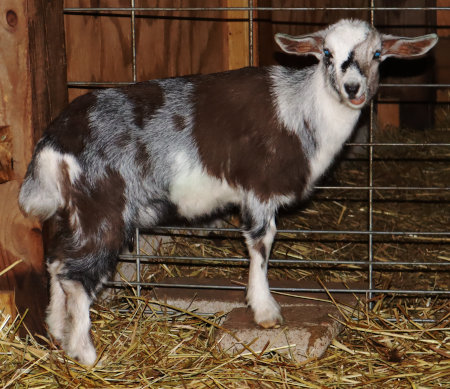
We don't have many bracken ferns growing in our woods, so I've always welcomed them for the beauty and diversity they provide. I've read they are poisonous to goats, but the goats have completely ignored them for years. So, I never worried about them until this little gal. . .

. . . decided they were munch-worthy. I chased her off a couple of times, and initially, she seemed okay, so I thought she didn't eat much. 

The next morning, she was in extreme stress, crying pitifully and vomiting, which was all very alarming. I've dealt with azalea poisoning in the past, so I had recipes at hand along with some of their ingredients. I didn't have everything, but immediate action was required, so I used what I had.

  • 1 pint distilled water (can use filtered)
  • 6 teabags of black tea (neutralizes the toxins)
  • 2 tbsp chopped, fresh (or 1 tbsp powdered) ginger (soothes nausea)

Simmer for 10 minutes. Cool and then add:

  • 1 teaspoon activated charcoal (neutralizes the toxins)
  • 1 tablespoon milk of magnesia (regulates peristalsis, i.e. keeps the gut working)
  • 1/8 teaspoon powdered rennet (neutralizes the toxins & helps digestion)
The dose for her age and weight was 10 ml by mouth (I used a dosing syringe). The original recipes are here.

Usually, one dose is enough, but she was still in distress an hour later so I gave her a second dose. I also started her on vitamin B complex injections, because any time a goat's digestive system (rumen) is off, they run the risk of developing thiamine deficiency, aka goat polio. I've dealt with that before too, and it's another scary condition to face.

She finally pulled through, but I have to admit I wasn't sure she would. The next day found me hunting down and digging out bracken ferns. I don't ever want to go through that again!

Bracken Poisoning in Goats © January 2022 

November 1, 2020

Oregano Tincture

Here's another of the fall preparations I've been working on, oregano tincture.


I first became interested in oregano as a medicinal herb when I was researching natural wormers for goats. I ran across an article that showed a study using oregano essential oil as a wormer. But I also learned that it has other useful medicinal qualities as well.

Page from my Homestead Herbal. Click to enlarge.

Oregano continued. Click to enlarge.

To make, I used my herb shears to cut up oregano leaves.


Enough to fill a jar about ¾ full. Then the jar is filled with vodka.


Vodka not only extracts the herb's medicinal qualities, but also acts as a preservative. These tinctures can keep for decades!

Freshly made

Then it's allowed to sit in a dark cool place for at least six weeks. About once a week I check my working tincture jars and give them a shake.

After steeping.

Earlier this month, my oregano tincture was ready to strain.


Like the elderberry tincture, I strain out as much as the liquid as I can through a sieve first. Then, I put the herb in the herb press, so I can squeeze out as much as possible. 

A dose is one to two droppersful, three times a day. For those who don't ingest alcohol, it can be put in a cup and boiling water added. By the time it's cool enough to drink, the alcohol will have evaporated, leaving behind the medicinal qualities and flavor. Oregano would make a good herbal vinegar too.

I find it interesting that many of our common cooking herbs carry the medicinal properties of helping relieve indigestion and gas. Coincidence? Or maybe, back in the day, cooks knew how to help folks enjoy their good cooking! Either way, this is a handy one to have around.

October 23, 2020

Elderberries for the Natural Medicine Cabinet

For the past couple of months, I've been working on late summer and autumn harvested herbs to fill my herbal medicine cabinet. One of those is elderberry (Sambucus); actually a fruit with medicinal properties. It's well-known for it's healing support for colds and flu.


August was my month to harvest the berries. I was thrilled that my berry nets worked and I harvested so many clusters of elderberries. 


I froze quite a few and dehydrated some too. Of the fresh berries, I made two preparations: elderberry vinegar and elderberry tincture.


Herbal vinegars are nice because they can be used as culinary vinegars: as salad dressing, in cooking, marinade, switchel, etc., or wherever vinegar is called for. Yet they contain the medicinal goodness of the herb. They're also very easy to make. 


Fill a jar about ¾ full of fresh elderberries and cover completely with your choice of vinegar. The vinegar should cover the berries with about an inch to spare. Give the jar a shake once a day or so.


Compare the photos above and below. Above is freshly made, below is about a week later. You can see the color change in the vinegar.


It's stored in a cool dark place for a minimum of two weeks. I made a quart and strained out the first pint after two weeks. 


I'll strain the rest after we use up the first. 

I also made elderberry tincture. It has a longer shelf life than the vinegar, and is used for medicinal dosing. I finally strained it the other day. You can read how I make an herbal tincture, here.


Squeezing the berries with a wine press.

One other preparation folks like to make is elderberry syrup. I thought about it, but it has a shorter shelf life than either the vinegar or tincture. I wasn't sure we could consume it in a timely manner, so I didn't make it for now. I figure I can always do it later from my frozen berries. 

Of the frozen berries I'll make jelly this winter (a favorite). And who knows, maybe I'll try my hand at elderberry wine(?) I certainly have an abundance to experiment with.

October 1, 2020

How To Make a Comfrey Salve

Several of you have wondered what happened to my "How To Make a Comfrey Salve" post. It showed up on feed readers, but the link rendered a "not found" error. That was because I accidentally hit "publish" before it was ready. I quickly reverted to draft, but feed readers don't make retractions, so that's what happened. Here it is with a slightly different title, in hopes it will hit the feed readers afresh. UPDATE: apparently the feed reader didn't recognize it, even with a new title. 😖 So I changed the title back again.

In my "Peppermint Tea" blog post, I mentioned that autumn is my time to work on many of my herbal preparations. Recently, I finished a batch of comfrey salve.

Of the 90 comfrey roots I've planted over the years, only
 a dozen survived. They seem to like it under my fruit trees.

Comfrey is also known as knit-bone. Modern science cautions against taking it internally, but it makes an excellent salve for muscle or bone bruises. It can be used on cuts and scrapes too, with the precaution not to apply it to dirty or deep wounds. 

The recipe is simple. It requires dried comfrey leaves, a carrier oil such as olive oil, and some beeswax. It can be picked fresh and partially dried. The high water content of fresh leaves can shorten shelf life, so wilted or dried leaves are recommended.

I dehydrated my fresh leaves for a couple of hours.

Recipe from my herb notebook.

The first step is to make an infused oil.

Enough olive oil to cover the comfrey.

The healing properties are extracted from several hours of low heat. Then it's strained.

Isn't that a lovely green!

Next, the oil is returned to the pan and the beeswax added.

Adding shredded beeswax to the infused oil.

Just enough beeswax is added to give the oil a spreadable but still soft consistency. To know if I've got that, I drip a little of the melted mixture onto a spoon and place the spoon in the freezer for a minute or so. That gives me an idea of what it will be like after it's cooled.

A good consistency. If the salve is stored in the fridge,
then it will be stiffer until warmed to room temperature.

Then the melted salve is poured off into a jar and allowed to cool.

Half-pint jar is perfect for a small batch.

Then it's lidded and labeled.


The same recipe can be used to make a variety of herbal salves, which are very handy to have around. Which makes me think this is the perfect time to run a special on one of my little eBooks, especially since it's been newly revised.

How To Make An Herbal Salve: an introduction to salves, creams, ointments, & more from The Little Series of Homestead How-Tos. Updated with more information and new photos. Available in a variety of e-formats. $2.49. You can find out more about it and where to find it at this link.

Now through Sunday, get it free at Smashwords.com with coupon code RG76E (expired).


How To Make a Comfrey Salve 
© Oct. 2020 by Leigh at

July 16, 2020

Essential Oils for Burns

Chalk this one up to experience. Last week, I spilled a pot of boiling canner water on my bare feet. The whole thing, as I carried it out the back door. I do my canning on my enclosed back porch, but once I'm done, I put the pot of hot water outside to cool. This helps keep at least some of the heat off the back porch. After the water cools, it's given to nearby potted plants. The water in this pot, however, spilled all over the top of my feet.

When I was a small child, I got second degree burns on my legs when someone accidentally poured freshly percolated coffee on my lap (this was in the days before drip coffee makers). My thighs were covered with burn blisters as a result, and this is what I feared would happen to my feet. I had to do something quickly.

The first thing I did was fill another large pot with the coldest water I could get from the faucet, and I submerged my feet in it. Did you know that insulating a burn from air stops the pain? Our tap water isn't very cold, but it stopped the pain until I lifted my feet out. I sat there as long as I could, but I still had a big clean-up job to do and needed to get to it. So I slathered the burns with aloe vera gel, got my clean-up done, and then put my feet back into the cool soaking water as fast as I could.

A little research on essential oils for burns told me I had several on hand that would help: peppermint, lavender, and tea tree. Essential oils are very strong and must be diluted, usually with a carrier oil such as olive or coconut. Instead, I used aloe vera gel.

Soothing Burn Gel
  • 1 tablespoon aloe vera gel
  • 2-3 drops each of these essential oils
    • peppermint (anti-inflammatory, analgesic)
    • lavender (anti-inflammatory, analgesic)
    • tea tree (soothes, inhibits infection)
Mix well and apply to burn generously several times a day.

Instant relief. The peppermint has an immediate cooling effect which is very soothing. Best if all, no burn blisters. 

Wearing socks and shoes was uncomfortable for a couple of days, but tolerable. I'm just thankful it wasn't worse.

August 1, 2019

Update On My Homemade Garden Bug Spray

I just had to show you this. Here's what happened to my collard plants in less than two weeks after applying my Homemade Garden Bug Spray.

New growth in the midst of the old cabbage moth eaten leaves.

Close-up of new collard growth.

A picture speaks louder than a thousand words!

The collards were fall planted and pretty much neglected once the weather turned warm. The bed is resting this summer, so all I did was add more leaf mulch after pulling the onions. I have barely watered it and just left the collards to die and decompose on their own. They were still hanging in there at the end of July and looking pretty bad due to cabbage moth larvae damage. When I made up a batch of the spray I dosed them good. I sprayed them well for two days and reapplied after it rained a few days later.

The plant in the photo has the most spectacular results, although the others are recovering as well. I rewarded them with a good watering!

In case you missed it, you can find the recipe for the spray here.


July 24, 2019

Homemade Garden Bug Spray

Speaking of the garden, here's something I wanted to share with you. I've been experimenting some with homemade bug sprays for the garden, and last year found one that really helped for cabbage moths damage. I found the recipe at An Oregon Cottage, and she sources Keeper of the Home for it. So I'm not taking credit for this garden spray myself, just passing on something I found that works!

The ingredients are simple and easy to grow.

Potted mint

Ingredients
  • 3 C fresh mint
  • 2 bulbs fresh garlic
  • 1 or two fresh cayenne peppers or 2 tsp cayenne powder
  • 3 qts water
  • biosafe dishwashing soap

Homegrown garlic

To Make

Chop garlic, mint, and cayenne peppers if using fresh. No need to peel the garlic because it's strained later. Just chop it as is. When handling hot peppers, always be sure to wear kitchen gloves! Put these three ingredients into a gallon pot with the water. Bring to a simmer.


Cool and strain into spray bottles. Add a small squirt of dish liquid and you're ready to go. Don't forget to spray the undersides of leaves too.


Last year this simple spray saved my cabbage and basil plants. This year I'm going to try it on my squash and cucumbers as well. I'm not claiming it will take care of all my garden pests, but it's helped so far.

It's a pepper spray, so it's best not to get it on your skin and especially not in your eyes. I store the spray bottles in the refrigerator and reapply after watering or rain.

UPDATE: August 1, 2019, you can see how well it works here.

October 23, 2018

Dr. Schultz's Super Tonic

"Let food be thy medicine" is attributed to Hippocrates, or at least it used to be. With the current social trend to question and criticize everything, who knows? Either way, it points to a different philosophy of heath and medicine than is common today.

So who is Dr. Schultz and what is his Super Tonic? I'm glad you asked. Dr. Richard Schultz is an herbalist and former student of Dr. John Christopher. He developed a food-based cold fighter and immune booster which he called Super Tonic. I found out about it from a friend who loaned me a video. That was about fifteen years ago and we've been making and taking it ever since. We recently needed a new batch, so I thought I'd take you a few pictures and tell you about it.

The ingredients can easily be homegrown or found in the produce section of most grocery stores. All are fresh, and preferably organic. I use equal parts by weight, but there's no need to be exact. For a one gallon jar I used about a quarter pound of each.
  • Garlic (not necessary to peel)
  • Hot peppers (the hotter the better such as habaneros)
  • Ginger root
  • Horseradish root (sometimes hard to find)
  • Onion (hottest you can get such as white)
  • Apple cider vinegar, raw, organic

Chop all ingredients. You can do it by hand or with a food processor, the only precaution is to wear gloves when handling the hot peppers, because they burn! Put it all in a glass jar and cover with the vinegar. I let it settle and add more if needed, the proportions I'm looking for are 3/4 settled herb and 1/4 vinegar on top. Exactness not required.


Place in a cool dark place for a minimum of two weeks; longer is better. Give the whole whole thing a daily shake to mix it up. When you need it, strain it into dark glass bottles, but save the veggies for squeezing.


I use my wine press to extract as much of the herbal vinegar as I can.


From this batch I squeezed out more than two extra cups of tonic.

Store in a cool dark place.

There is no specific dosage, but it's recommended to start small, such as half a teaspoon in a small glass of water or juice (tomato is good). It can be used as the vinegar in oil and vinegar salad dressing, to season greens, etc. All the ingredients are common foods, so it's impossible to overdose. It mostly boils down to taste preference and how much health support you want.

Why are these ingredients so good for you, and how to they help fight winter colds and sinus problems, plus boost health and immunity? I'm glad you asked that too.

Garlic - antiviral, antimicrobial, antioxidant, antibacterial, expectorant

Hot peppers - anti-inflammatory, antioxidant, decongestant, antibacterial, analgesic, stimulant

Ginger - antioxidant, anti-inflammatory, antibacterial, stimulant, digestive, analgesic

Horseradish - antibiotic, decongestant (especially sinuses), expectorant, stimulant

Onion - similar to garlic, anti-inflammatory, anti-allergenic, decongestant

Apple cider vinegar - antioxidant, antibacterial, antiseptic, antiviral, and ant-fungal, preservative

All that healthful benefit from common foods. You can understand why we keep in on hand.

Dr. Schultz's Super Tonic © October 2018 

March 23, 2018

How To Make an Herbal Tincture

Several weeks ago I shared what we were doing for Dan's hand to support healing. One of those things is an herbal formula called Bone, Flesh, & Cartilage. It was originally developed by Dr. John Christopher, and we found the recipe in a video series by one of his students. Dan has been using a strong tea of the BF&C ingredients directly on his fingers as a fomentation, and also taking it in tincture form orally. The other day I made a batch and thought you might be interested in how I make an herbal tincture.

A tincture is extract of herbs in alcohol. It's advantage is the alcohol acts as a preservative so that it stores for indefinite lengths of time. Teas must be used immediately or they will eventually grow mold and have to be discarded.

The ingredients for this particular tincture are equal parts by weight of white oak bark, marshmallow root, mullein leaf, wormwood, lobelia, scullcap, comfrey root, black walnut bark, and gravel root.

The three forms in which herbs are used.


Herbs come as cut and sifted, whole, or powdered. I like using cut and sifted herbs for teas, because it's hard to strain out powdered herbs with an ordinary tea strainer. I like using powdered herbs for tinctures, however. The theory is that the more surface of the herb is exposed, the more medicinal components can be extracted.


This is white oak bark that I broke up with a
hammer and then ground in the blender.

Cut and sifted and powdered (C/S) herbs can be mixed however. The general rule is to use half the amount of powdered as C/S.


I find this pretty much holds true weight wise. It takes half the volume of a powdered herb to weigh the same as C/S. I will say that C/S herbs make a prettier tincture, i.e. clearer. Powders tend to make the tincture a little more opaque.

I use large glass jars for tincture making.

I use vodka for my alcohol base. (For those who don't consume alcohol, see information below under dosing.)


The cheap kind works just as good as the expensive stuff. Some people dilute the vodka with water. Some recipes call for vinegar instead of water. Vinegar is especially helpful to extract specific medicinal components which can't be extracted in water, such as the alkaloids in lobelia and golden seal.
 
Different people recommend different ratios of herbs to alcohol. I was taught that when the herbs settle, the amount of liquid on the surface should be 25% of the total amount.


The above mixture measures 5 inches, so I'm aiming for the liquid layer to be about an inch and a quarter. This makes a strong tincture with doses measured in dropperfuls.

Put in a dark cool place and shake the jar often. It should sit for a minimum of two weeks. Longer is better.

When it's needed, the tincture is pressed. This gets every last drop out of the herbs. I put the unstrained tincture into a jelly bag and then use a wine press. It has a spout to drain off the liquid through a hose into a bottle,


but I just set up mine to drain directly into any handy container (stainless steel, glass, or ceramic.)


Pour into bottles and store in a cool, dark place. I especially like the brown bottles for storing tinctures.

Doses are by eyedropper.


One dropperful is about 1/4 teaspoon. It can be squirted directly into the mouth, mixed with water or juice, or...

Those who don't drink alcohol can add it to one cup of boiling water to evaporate the alcohol. Allow to cool and drink the same as tea.

A typical dose might be one dropperful three times per day. That can be adjusted according to results, but results will vary depending on the strength of the tincture. If you take the herbs as tea too, you can give whatever ails you a double-whammy. Dan is taking one teaspoonful (4 droppers) of BF&C tincture three times a day.
 
Tinctures can also be made from individual herbs which can be mixed as desired. In fact, this is the best way to make your own custom blends. Of course you need to know your herbs, their medicinal properties, and uses. And double of course you need to get permission from your health care professional before using herbs, etc., etc., (insert usual disclaimers here), etc., etc.
 

February 25, 2018

What We're Doing for Dan's Hand

This post is a follow-up to my last one about Dan's hand.

Of the two fingers that collided with the table saw, the ring finger looks really good, although where the fingernail used to be is still scabbed and tender. The middle finger is still open and draining and looks a mess. The saw sliced through quite a bit of skin which is starting to come off. Healing will be slower for that one because it has to work inside out. Both fingers are extremely sensitive to pressure and to cold.

We received no instructions for the hand other than to keep it clean and change dressings. So to support healing we've been focusing on good nutrition, improving circulation, and healing herbs.

Since we grow so much of our own food we eat a pretty good diet anyway. For now, we're keeping meals light and easy to digest. Bone broth is especially rich in minerals and nutrients, so it forms a basis for daily soup. Detox tea is tasty hot or cold, and makes a nice beverage any time of the day. Here's the recipe.

Detox Tea
  • 2 parts dandelion root (cleansing, anti-inflammatory, liver tonic)
  • 1 part each of 
    • burdock root (blood purifier)
    • cardamom seed (digestive, liver, and gall bladder support)
    • ginger root (circulatory stimulant, antiseptic)
    • pau d'arco bark (anti-fungal, anti-viral, anti-inflammatory)
    • cinnamon bark (antiseptic, kidney tonic)
    • clove buds (antiviral, antibiotic, antioxident, aids digestion)
    • fennel seeds (circulatory stimulant, anti-inflammatory, kidney support)
    • licorice root (detoxifier, anti-inflammatory)
    • juniper berries (facilitates removal of acid wastes from urine)
    • black peppercorns (antioxident, antiseptic, aids digestion)
    • uva ursi leaf (bladder and kidney support)
    • horsetail (anti-inflammatory, tissue healer, source of minerals)
    • parsley leaf and root (anti-inflammatory, immune booster)
    • orange peel (bioflavinoids, kidney support, tonic)

To make a decoction (tea of roots, bark, and berries) an ounce of dried herbs is added to a pint of cold water. It helps to soak the herbs in the water for several hours. Then heat to boiling and simmer for 15 minutes. Cool and strain.

I mix this about half and half with green tea which is an antioxidant, anti-inflammatory, improves blood circulation, and promotes wound healing.

Good circulation is important because it's the blood that carries nutrients and healing elements to the wound and carries waste products away. Exercise helps here, both walking and working the hand and fingers as best he can.

Hot and cold treatments improve circulation. How? Think of how flushed the skin can become when you're hot and how it turns blue when you're cold. Heat forces the blood to the skin and extremities; cold forces it back into the core of the body. Alternating hot and cold promotes circulation. I also give Dan what I call "circulation tea" made from cayenne pepper powder and ginger root powder. Cayenne promotes circulation by strengthening the pumping action of the heart, and ginger promotes circulation in the capillaries.

Another herb that is helpful for circulation is garlic. Plus it's a powerful antibiotic and antiviral. Dan makes himself a drink of raw garlic and ginger in tomato juice every day.

To promote healing Dan applies an herbal salve during the day called Dy's Liquid Bandage. It is actually a veterinary product, but it contains healing ingredients we also use on ourselves: olive oil, beeswax, golden seal (antibiotic, anti-inflammatory), bee pollen (immune booster, antibiotic), yarrow (stimulates circulation), aloe vera (anti-fungal, tonic, promotes wound healing), vitamin E (antioxident, promotes healing), tea tree oil (anti-fungal, antiseptic, anti-inflammatory), propolis (antibiotic, antiviral, promotes wound healing), calendula (antiseptic, anti-fungal, anti-inflammatory, promotes wound healing), and honey (antibacterial, anti-inflammatory). It was on sale in January so I ordered some to have on hand. Little did I know then how quickly we would need it. It protects and helps heal the wound plus keeps it from drying out.

At night we're doing a Bone, Flesh, & Cartilage fomentation. A fomentation is wrapping an area in a cotton cloth soaked in a strong concentration of herbal decoction.

Bone, Flesh, & Cartilage
Equal parts of:
  • white oak bark (antiseptic)
  • marshmallow root (wounds and skin ulcerations)
  • mullein (wound healing, kidney support, antiseptic, anti-inflammatory)
  • wormwood (antibiotic, antiseptic)
  • lobelia (anti-infective, a catalyst for other herbs)
  • scullcap (nervine)
  • comfrey root (promotes cell growth and wound healing, nutrient rich)
  • black walnut bark (anti-fungal, anti-inflammatory, rich in minerals)
  • gravel root (immune stimulant, solvent for unwanted mineral deposits)

This is also made into a decoction made the same way as the Detox Tea above. After it's strained it is simmered down to about half it's original volume and cooled. The fomentation is applied at night, six nights a week. We wrap the BF&C soaked cloths around the fingers, wrap with plastic wrap, and cover the hand with a clean sock. BF&C tincture internally rounds out the routine.

So that's our daily routine. Of course, anyone who's had a severe injury knows how slow healing is, and how hard it is not to become discouraged. But I have to say that the response to our GoFundMe for Dan's medical expenses has been extremely encouraging, not to mention humbling. I hope you could tell from "A Message From Dan" what a difference it's made for him. To have so many people we've never met respond so willingly and generously has given him hope. And to have so many people praying for him has given him peace of mind. From the bottom of my heart, thank you.

January 18, 2018

B2B Book Review: Going Herbal

For a book lover like me, opening my Back To Basics Living Bundle was like opening a Christmas gift filled with lots smaller presents inside. Where do I begin? What do I look at first? Actually, it wasn't that hard. The first one I wanted to look at was Marie Beausoleil's Going Herbal: 30 herbs you can start using today for food, cleaning, personal care & health.

Marie's A Cabin Full of Food was in last year's B2B bundle, so those of you who bought that bundle likely understand why I chose her book first. She writes the kind of books that you really want hard copies of, books you'll use as a reference as well as a resource.You can read my review of that book here, and I can tell you that Going Herbal didn't disappoint.

What makes this book different from other books about herbs is her chapter entitled "The Common Active Components of Herbs." Most books give you a list of culinary and medicinal uses for herbs, but in this chapter Marie explains why herbs work. She gives you a brief history of herbs in western culture, also on the safety and quality of herbs including a discussion of misleading information online. The next several chapters discuss growing your own herbs, harvesting and storing, and how to set up your own kitchen pharmacy. If you are unable to grow your own at present, there is an excellent discussion on how to purchase good quality herbs: how to evaluate the company's website and products. The next chapter discusses essential oils and how to choose quality oils.

The bulk of the book is devoted to the herbs, "30 Herbs & How to Use Them." Each herb includes a section on cultivation, tips on growing, medicinal uses, and several recipes. Recipes like Aloe Vera Shampoo, Burdock Hair Conditioner, Dandelion Coffee, Elderberry-Echinacea Syrup, Ginger Oil, Hawthorn Jelly, Basil Insect Repellent, Cayenne Tincture for Relief of Joint Pain, Garlic Antibacterial Ear Drops, Lavender Body Lotion, Licorice Candy, Marshmallow Salad, Nettle Beer, Potato Plantain Soup, Clover Blossom Tea, Rosemary Foot Scrub, Sage Incense, Spearmint Essential Oil, Thyme Facial Toner, Turmeric Juice, and Valerian Tea.

Needless to say, I'm really happy with this book and if it comes out in paperback, I will likely purchase a copy.

For a list of all the eBooks in the bundle, click here. If you are interested in any particular one and would like me to review it, just ask!

You have several options to purchase the collection:
  • Online access: $39.97
  • USB flash drive: $64.97 (includes domestic shipping)
  • USB flash drive PLUS online access: $69.97 (includes domestic shipping)

Click here for more information or to buy.

And remember! If you buy the bundle through my blog, you get your choice of one volume from my Critter Tales Series eBooks, for free. My Honeybee Tales is included in the bundle, but if you buy the bundle through this link, email me with which other Critter Tales volume you'd like, and I'll send you a link for your free copy. (The first volume in the Critter Tales Series is always free, no purchase ever necessary. You can get a free copy of that here.)

B2B Book Review: Going Herbal © January 2018  

January 17, 2017

B2B Book Reviews 1: Homesteading, Herbal Medicine, and Homeschooling

When I was a senior in high school I took an aptitude test. I scored highest in music and home economics, lowest in police work and sales! As you can imagine, that means that trying to promote anything (most especially my own books) is truly difficult for me. The Back To Basics Living Bundle folks put together a really nice marketing package for their affiliates, but instead of presenting you with a more typical sales appeal, I'm going to do what feels comfortable for me, i.e. a series of book reviews from this year's bundle. So from one book lover to another, here are some of the B2B books that I really enjoyed.

Homesteading

There are many homesteading resources in the bundle, and for those who are looking to get started, this one by Carmen Nuland is a really great little book. 8 Steps to Homestead Beginnings: How to defeat overwhelm when starting a homestead talks about the reasons for homesteading and then helps you develop a vision for your future homestead. It takes you through evaluating your resources, planning, goal setting, getting started, identifying obstacles, tracking expenses and income, and review. It includes all the things that need to be thought through in order to create a plan and take the first steps toward success.

Herbal Medicine

For those of you interested herbs and natural healing, Kami McBride's How To Make Healing Herbal Oils is a really nice addition to the bundle. In it she introduces the benefits of using herbal oils, and then teaches you how to make your own. It starts with the basics of making infused oils with either fresh or dried herbs, then shows you how to make two useful oils from lavender and comfrey. She details her seven favorite herbs for infused oils, plus gives recipes for making a variety of healing blends: Aches and Pains, Bumps and Bruises, Relaxation, Scrapes and Scratches, Headache Oil, Healing Bath Oil Blend, Luxury and Massage Oil Blend. She also includes a chapter on preserving your oils, plus a list of resources.

Homeschooling

One of the homeschooling resources is a set of five unit studies from Carol J. Alexander's Lessons from the Homestead series. She has included:
  • Lessons from the Bee Hive
  • Lessons from the Garden
  • Lessons from the Hen House
  • Lessons from the Seed Catalog
  • Lessons from the Tree House

These parent guides help you adapt your own homestead resources to a variety of grade levels and subjects: math, science, geography, language arts, art, home economics. Each booklet includes a vocabulary list and resources.

My favorite in the series is Lessons from the Tree House. It uses the unschooling approach which is such a natural fit with homesteading. In her introduction, Carol cites a work which states that American children typically only get 30 minutes per week in unstructured outdoor time, whereas they spend over 30 hours each week in front of some kind of electronic screen. She writes, "Those sobering statistics compelled me to go outside and take pictures of their fort for future scrapbooks. While out admiring their work, I couldn't help but think of all they learned while working on this project."

Divided into The Design Phase, The Building Phase, and The Enjoyment Phase, this little eBook helps parents develop both academic as well as life skills in their children. I only wish it was available when I was homeschooling my kids!

The Back To Basics Living Bundle will be available through January 22 and includes 73 homesteading, self-reliance, natural living, and preparedness resources for $29.97.


BONUS: If you buy the bundle through my blog, I'll gift you with your choice of one eVolume from my The Little Series of Homestead How-Tos. After you place your order simply email me at 5acresandadream @ mail. com, and let me know which one you'd like. I'll send you a link to download a free copy.

Tomorrow I'll review three really good books from the bundle that deal with food preservation and storage.

© Jan 2017 by Leigh at http://www.5acresandadream.com/