September 10, 2022

Our Agrarian Year: Shift to Autumn

September, October, and November are the autumn months of our agrarian year. Almost as if on cue, we've experienced an overall temperature shift from sweaty hot days to mild and comfortable. I've started wearing a light jacket when I go out to do morning milking. The days are noticeably shorter, and the sound of the wind in the leaves has changed. Oddly, we haven't seen many migrating birds yet. 

We made the decision last month to make the masonry stove next summer's main project, when we won't feel rushed by coming winter. It's a big project and we have to get it right. Incorporated into that is finishing the front bedroom, because originally, it shared the fireplace with the living room. It's one of the two remaining unfinished rooms in the house. 

The other unfinished room is the sunroom, which I hoped to turn into my studio before it became a storage room as we worked on the rest of the house. An idea that's been on our master plan for a long time, is to attach a greenhouse onto this sunny, southeast facing room. Dan really wants to finish the house (gee, it's only been 13 years!) and building a greenhouse is a much more suitable project for fall and winter. 

Seasonal Chores:

  • Clean out
    • gutters
    • chimneys
    • wood stoves
  • Limb trimming
  • Continue harvesting and preserving the remains of the garden
  • Finish fall and winter planting (as early as possible)
    • Pasture
    • Garden
    • Seed starts
  • Get the livestock down to winter numbers
  • Winterize anything that needs it

Projects:

  • Mill lumber for garden beds and our greenhouse project
  • Develop specific plans for the greenhouse
  • Start to build said greenhouse

I know the project list seems really short, but like spring, autumn is a time where seasonal needs take priority.

September 6, 2022

Power Blender

Something that's been on my wish list for decades is a Vitamix Blender. They are very expensive, however, and all things considered, never seem to make it to the top of my financial priority list. Last week, I was researching ketchup recipes and ran across a video that caught my attention because the gal cooked all her ingredients together and then blended it—including the tomato peels and seeds!—with her Vitamix. The result was a beautifully thick ketchup with less cooking time. Considering all the hours and days I've spent cranking my Roma Juicer to make tomato sauce, I had to give Vitamix another peek. 

Well, they're still expensive, but when I found a refurbished one for around $300 on Amazon, I was tempted. So, I put it on my mental back burner while I went to work on pears. By the time I took my next break, I decided to do a search on Vitamix type blenders. I spent hours reading and analyzing reviews and comparisons. Here's what I ended up with.
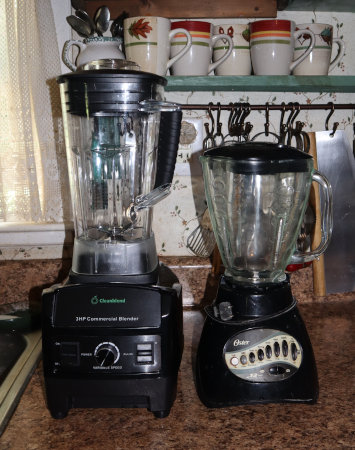
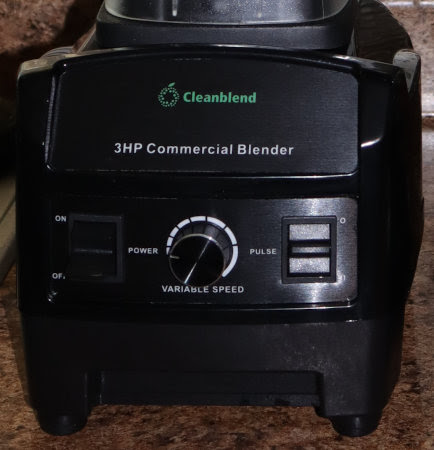
Cleanblend Commercial Blender

Side by side with my old Oster blender.

At a glance, it looks exactly like the a Vitamix, except for the labeling. 

To compare, both are big and heavy, both have variable speeds (unless you get a Vitamix with preset speeds), both have a pulse function, both have 64-ounce BPA-free Tritan containers, both have stainless steel blades, both come with a tamper, both are self-cleaning, and both preform the same functions: blend, chop, grind, emulsify, and will make nut butters, ice cream, and hot soup. To contrast, the Cleanblend boasts 1800 watts of power (3 horsepower), while the Vitamix lists 1440 watts (2 horsepower). 

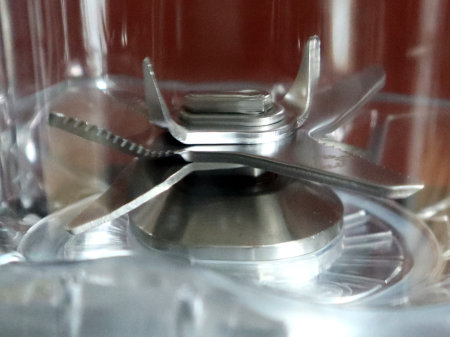
Also, the blending blades are different. 

Vitamix blades

Cleanblend blades (top view)

(side view)

Another difference is the warranty. Vitamix now offers a free 7-year warranty (formerly it was 10 years), while Cleanblend offers a 5-year free warranty. Both companies offer an extension to 10 years for $75. So, even adding the 10-year warranty to the Cleanblend, it still comes in cheaper than a Vitamix.

Prices? I got my Cleanblend (currently on sale at Amazon) with free shipping for about $200 including tax. Vitamix blenders start at $350 and range up to $800, depending on the model and accessories. Taxes, if applicable, will be on top of that. Vitamix does have more models and accessories to offer. But I think the clincher, for me, was the smoothie tests done at eater.com. They compared smoothies made with seven high performance blenders, and the Cleanblend really did the best job. You can see the photos at this link.

I've just started using it and will show you how well it works in upcoming blog posts. One thing I really like is that the blade unit is incorporated into the blender jar. That's key to its convenient self-cleaning, but also, means there's no gasket to deal with. That was something I don't like about the Oster; the gasket gets grungy quickly and periodically needs replacing. These power blenders are much nicer in that regard. 

I have to add that I was somewhat hesitant about buying another electric gadget. The world's energy future looks very insecure, with rising costs and discussions about energy rationing. That paints a very bleak picture, where the promised dark winter seems inevitable. Perhaps that's another good reason for the buying the less expensive Cleanblend rather than the Vitamix. On a prepper note, I do have a hand-crank blender, which you can see in this blog post. It has nowhere near the power of my old Oster, let along my new Cleanblend. But considering the way things are, I'm glad I've got it. There's a sense of comfort in being prepared. As with all of the tools and equipment we use, Dan and I have sought manual or off-grid alternatives and learned how to use them. 

Until then, I'm going to take full advantage of my new Cleanblend! I'm excited about the possibility of not only ketchup and tomato sauce, but powdering dried eggs, herbs, fruits, and vegetables. Remember my hopniss flour? I was hoping for something like cornstarch or arrowroot powder, but the best my Oster could do was gritty, which wasn't good for gravy. I'd also like to try making mayonnaise. And who knows what else! More soon.

September 2, 2022

Yam Berries

Chinese yam bulbils

Several years ago I bought some Chinese Mountain Yam tubers to plant. Chinese yams are an edible perennial that produce both edible tubers and also edible aerial bulbils, sometimes called yam berries. Then I hesitated to plant them because I read they can be invasive. They are the reason I decided to convert my hoop house to place for growing perennials. I chose one of the bordered raised beds and planted the tubers. They are a vine, so the hoop house has been a good place for them. This is the first year they've produced a significant amount of the yam berries.

Dioscorea polystachya (formerly Dioscorea batatas).
They are also called air potatoes or cinnamon vine.

There are other species of dioscorea, but not all of them are edible. According to the Plants for a Future website:

"Edible species of Dioscorea have opposite leaves whilst poisonous species have alternate leaves"

And according to David the Good in his video, "Yamberries on the Chinese Yam," the variety I planted is not the invasive one. Even so, there seems to be a lot of contradictory information around the internet on them. 

The other day, I picked all the yam berries and had enough to try for dinner.

My harvest, washed and ready for cooking.

You can see how tiny they are!

They really do look like miniature potatoes, so the name "air potatoes" makes sense. "Cinnamon vine" apparently refers to the smell of their flowers (which I wasn't watching for and so didn't notice!)

To cook, I tossed them with a little olive oil, salt, and pepper. Then I oven roasted at 425°F (220°C) for about 12 minutes.

Oven roasted yam berries

They were quite good. They're starchy, but not quite like true potatoes. Dan said they reminded him of hopniss. One of these days when I have a few more plants, I'll harvest some of the root and give that a try.

It's fun experimenting with perennial foods. They require care to establish, but once established, they are less work to maintain than annual food crops. While production varies from year to year, they are a reliable source of food whenever annuals do poorly. Plus, most of them are quite attractive and easy to work into an edible landscape. 

One disadvantage is that they aren't familiar foods. They require learning how to grow, harvest, and cook, not to mention acquiring a taste for them. We're all raised on particular foods, and those become the personal standard for our diet. We find them easily in the grocery stores and in the seed catalogues. They are our personal comfort foods of childhood.  
 
We ate this year's yam berry crop, but next year I'll experiment with some food combinations. I think they'd be good with cowpeas or beans, and in soup. 

Is anyone else growing edible perennials? 

Yam Berries © September 2022