June 1, 2023

Seasonal Shift: Summer

June, from my cross-stitch calendar Christmas present. :)

Summer is here. I have to say that I enjoy early summer the best; we've finished with the cold, but the oppressive heat hasn't arrived yet (we save that for July and August). Summer's arrival is notable because it signals a general shift in almost everything we do. Garden work is now in the morning while it's cool. Afternoons are for indoor and shade projects. We've switched from flannel to cotton bed sheets, and I've moved cooking and canning from the kitchen to the back porch. With the solstice coming up, we'll need to change the angle of our solar array too.

In terms of projects, nothing new is planned because "food first." Garden mulching, weeding, picking, and processing are the priority of the season. Summer is usually dry, so I concentrate on monitoring soil moisture and making sure everything has enough water to grow. We'll continue working on the greenhouse and sewing room. And there are always things that come up. So, were definitely going to be busy.

How's everyone else's summer shaping up? Gardens? Vacations? Building projects? Anything else?

May 27, 2023

Garden Notes: May 2023

Rainfall 

  • 7th-8th: 0.55"
  • 14th: 0.07" 
  • 16th-17th: 1.05"
  • 18th: 0.37"
  • 20th: 0.2"
  • 27th: 0.75"
  • 28th: 0.35"
  • Total: 3.35 inches

Temperature
  • range of nighttime lows: 39 to 64°F (4 to 18°C)
  • range of daytime highs: 65 to 86°F (18 to 30°C)

Weather Notes

The second week of May saw our seasonal weather shift. We got our coldest temperatures the first week of the month, and the wind blew from northerly directions. Then, the wind started coming from the south and the temperature pattern changed. We've had some hot days, but mostly, it's been glorious.

Planted
  • watermelon (Orange Glo)
  • sweet potato slips (mostly purples)
  • okra (Clemson Spineless)
  • grain sorghum (mixed seed)
  • cherry tomatoes (Matt's Wild and Tiny Tim)
  • summer squash (Tatume)
  • winter squash (Sweet Potato)
  • pole beans (Cornfield)
  • peanuts
  • bell pepper transplants (Giant Marconi and Red Bell)

Growing

Potatoes in the African keyhole garden. 
Also pictured - yarrow and butterfly weed.

Potato flowers

On the front porch trellis, I have yam berry vines growing.

Buckwheat and corn

Where's the corn, you ask?

Finally outgrowing the buckwheat! Can you see it?

Tomatoes are flowering, but no tomatoes yet.

Harvesting & Eating

Peas, cherries, and the last of the asparagus and strawberries

Pea, asparagus, lettuce, and peanut salad

Cherry pie

The pie used up the bulk of my cherry harvest, but it's such a treat that it was worth it. The remaining pickings will be frozen to add to jelly or wine.

Lambs quarter

Years ago, when I first started harvesting lambs quarter for eating and canning, I followed the advice to harvest it when it was under one foot tall. I cut down the stalks and picked off all the leaves. I've since figured out a quicker and easier way, one that gives me a longer harvest too.

Instead of cutting down the entire plant, I just harvest the clusters of leaves that grow at the end of the stalk and branches.

I cut them at the base of the leaves.

When harvested like that, all that's required is to wash and cook them. No tough stems to discard, and the plants will grow new clusters of leaves that can be picked no matter how big the plant gets. I find I can harvest this way until they flower and go to seed. 

Canning lambs quarter, a favorite cooked green.

Oregano drying

Daikon radish over a foot long! Even though it's large, it's
still sweet and makes an excellent addition in our salads.

Chopped peas & asparagus, grated daikon, feta cheese, & hard boiled egg.

Kimchi

Not Harvesting

At least not harvesting much of.

Multiplier onions and garlic.

I've gotten a very poor harvest of these. I'm guessing it's because our winter was so cold that most of them didn't make it. Some years are like that.

There you have it. May has been a busy month in the garden. How about you?

Garden Notes: May 2023 © May 2023

May 23, 2023

Trying a New Technique for Making Sauerkraut

The best sauerkraut is said to be made in its own juices. The cabbage is shredded and pounded enough to bruise the juice out of it. The requires extremely fresh cabbage, which I don't often have, since cabbage moths make cabbage growing a real challenge for me. Cabbage is an inexpensive vegetable, so I don't mind buying it to make sauerkraut. The trade-off is that it's usually too old to pound out the juices. So, most often, I make sauerkraut by mixing and adding brine. 

Recently, I ran across a video with a different method for making sauerkraut. It's a four-part series with the first video here. Instead of shredding the cabbage and adding the brine, the cut cabbage was salted first and allowed to sit overnight. Salt pulls moisture from food (through osmosis, I reckon) and so helps the cabbage make it's own juice. I decided to give it a try.
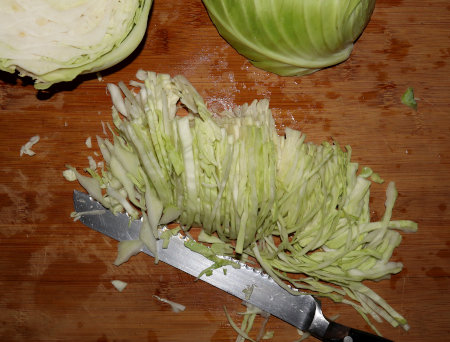
The first step is shredding the cabbage.

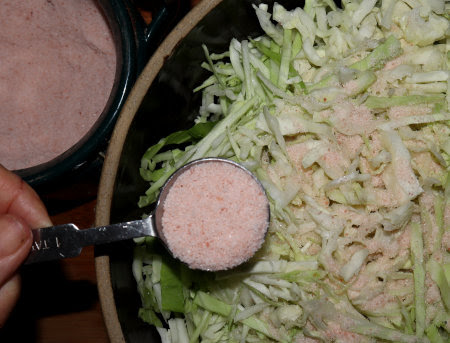
After shredding, the cabbage was sprinkled with salt and mixed in. The video didn't mention an amount, so I used the same amount of salt as my old recipe, 2 tablespoons for a medium head of cabbage. I covered it with a clean dishcloth and let it sit on the counter overnight.
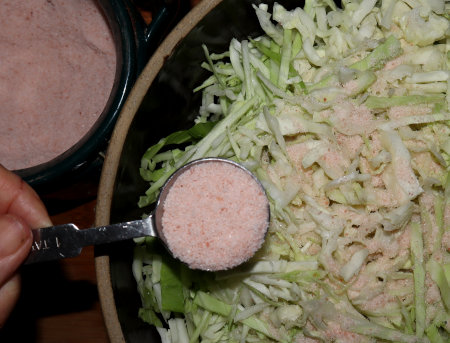
I use Himalayan pink salt for the minerals.

The next morning the cabbage shreds looked wet and I found that the salt had indeed pulled some juice from the cabbage.


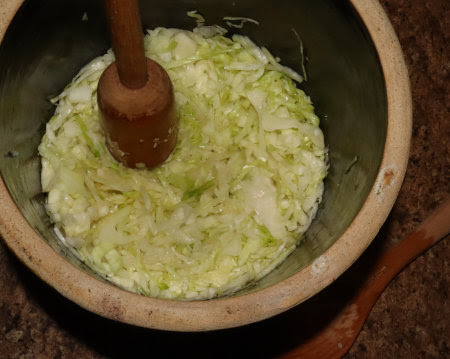
The next step is pounding. In the video, the gal dumped her shredded cabbage into a 5-gallon bucket and stomped it like grapes. I opted to used my pounder.


That squished out more juice. Not enough to cover the cabbage, but the video said in that case, cover it with a light brine. The video used fresh dill and slices of horseradish for flavoring, but I used juniper berries and celery seeds.


After covering the crock contents with more brine, I submerged the cabbage shreds by covering them with a saucer and weighting it with a pint jar half filled with water. 

Then the crock is covered with a clean cloth an allowed to ferment.

I find that three days is good for our taste buds. Then I transferred it to a half-gallon jar with a lid to store in the fridge. 

Then the taste test. We both love sauerkraut and really liked this one. I especially like to use it as a relish on a good hamburger.
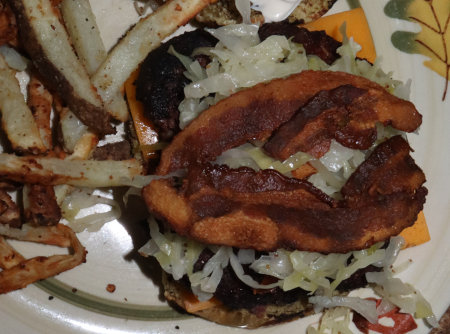
Bacon cheeseburger with sauerkraut.

One other really good tidbit I picked up from the video series is that sauerkraut can be frozen without destroying the probiotics. Canning will kill them, but I usually make it one cabbage at a time and refrigerate it after it's soured to the tartness we like. It does keep getting more sour, even in the fridge, so freezing sounds like a good way to go.

Conclusion? This method is a keeper! I'll have to try it with my other fermented vegetables as well.